
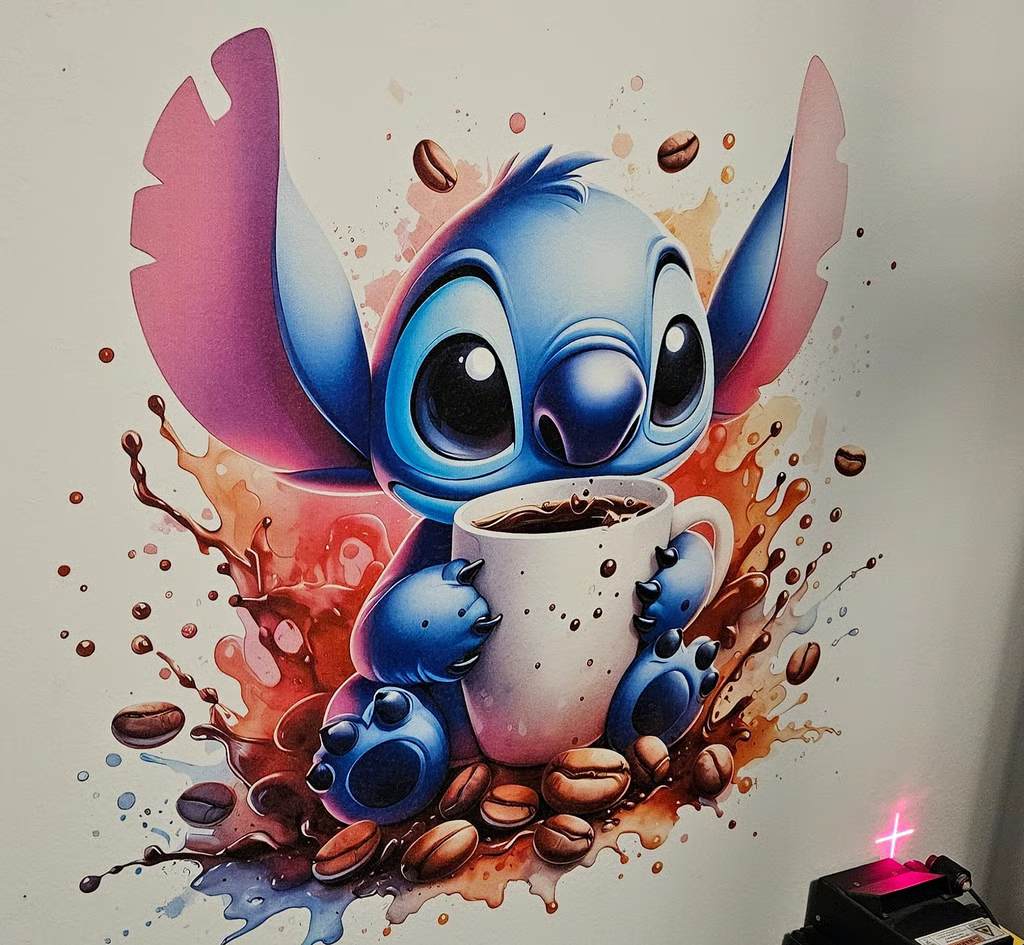
DXonJet Wall Printer Review-From Mike Davis
December 22, 2025The Spec Sheet Lie: What Wall Printer Manufacturers Aren’t Telling You
March 21, 2026DXonJet Wall Printer Review-From Mike Davis
December 22, 2025The Spec Sheet Lie: What Wall Printer Manufacturers Aren’t Telling You
March 21, 2026Common Challenges in Vertical Wall Printing: A Manufacturer’s Perspective
By Alex Wang, Co-Founder of DXonJet
As the vertical printing industry evolves, many customers ask: "Why is it so difficult to build the 'perfect' wall printer?" After more than a decade in R&D and manufacturing, I want to pull back the curtain on the technical trade-offs we face and explain how we navigate these challenges to deliver reliable, industrial-grade technology.
The "Ideal" Printer: What the Market Demands
Professionals in the wall printing industry typically look for a machine that checks every box:
High Precision: 1200+ DPI for photographic quality.
Extreme Speed: High-speed production without sacrificing detail.
Stability at Height: Reliable printing at 4+ meters.
Versatility: Long-range jetting for uneven surfaces and fast white ink application.
Low Maintenance: Minimal downtime and affordable running costs.
Achieving all of these simultaneously is an engineering "balancing act." Here is how we address the most common technical hurdles.
The Printhead Dilemma: Speed vs. Longevity
To increase speed at high resolution, one might simply add more printheads. However, more printheads increase the cost of the machine and the complexity of maintenance.
The Trade-off: Increasing the voltage to a printhead can achieve a longer "jetting distance" (printing from further away), but this significantly shortens the printhead’s lifespan and causes ink droplets to scatter, leading to blurred edges.
The DXonJet Solution: We optimize our systems to maintain a balance. We recommend a safe jetting distance (typically 6-8mm) for maximum precision, but engineer our Z-axis sensors to react instantly to wall irregularities, protecting the head while maintaining quality.
Ink Viscosity and High-Speed Stability
The Challenge: To print across long distances, you need higher-viscosity ink. However, thicker ink is more prone to sedimentation, which can clog printheads. Furthermore, when printing at high speeds on tall walls, the mechanical vibration (shaking) of the vertical rail can cause color banding or "ghosting."
The DXonJet Solution: Our machines feature a heavy, 29.5kg solid aluminum base and high-precision helical racks. This weight provides the "center of gravity" needed to keep the printer perfectly still, even when the Z-axis is moving at maximum speed at a height of 4 meters.
The Complexity of White Ink
White ink is essential for printing on dark or glass surfaces, but it is notoriously difficult to manage.
The Challenge: White ink contains titanium dioxide, which settles quickly. If left stagnant, it can ruin a printhead in days. When jetted across long distances, white ink tends to "mist," coating the UV lamps and internal components in a fine white dust.
The DXonJet Solution: We implemented an active ink circulation and stirring system. Even when the printer is powered off, our specialized components keep the white ink moving to prevent clogging, ensuring the machine is always ready for production.
Achieving Minimal Margins
The Challenge: Many customers want "edge-to-edge" or borderless printing. While some mechanical designs allow for small margins, true borderless printing on all four sides requires expensive robotic arm technology that is not cost-effective for most businesses.
The DXonJet Solution: We focus on "Practical Margins." By optimizing our rail and carriage design, we allow operators to get as close as possible to ceilings and corners without compromising the structural stability of the machine.
Engineering for the Real World: The VPJet4.0 Approach
At DXonJet, we don’t believe in "perfect" machines—we believe in reliable systems. Our VPJet4.0, launched in 2022 and now used by over 400 clients worldwide, is the result of these lessons. We have integrated:
Modular Design: Fewer screws and simplified parts to make setup faster and more stable.
Smart Maintenance: Automated cleaning cycles that function even during downtime.
Future-Proofing: Our customers can upgrade software, firmware, and hardware modules (like floor-printing kits) without needing to purchase an entirely new machine.
Final Thoughts
Building a vertical printer is a "symphony" of mechanical engineering, software control, and ink chemistry. While the "perfect" maintenance-free printer doesn't exist yet, we are closer than ever.
If you are facing specific technical challenges or want to learn more about how our engineering choices can benefit your business, I invite you to reach out. I personally consult with over 100 customers a year to ensure they have the expertise they need to succeed.
[Contact Alex Wang] | [View Our Troubleshooting Guide] | [Explore VPJet4.0]

 English
 Español
 Français
 Deutsch
 Italiano
 Nederlands
 Polski
 Русский
 Türkçe
 한국어
 Română
 繁體中文
 العربية
 हिन्दी
 日本語